Healthcare Automation
Updated on Feb 2026. Healthcare Automation companies can increase marketing outcomes and save time by implementing marketing automation. You can devote more time to high-value operations, such as lead generation and sales closing, by automating marketing tasks.
What is Healthcare Automation?
Healthcare is a segment of Personalized Care & AI-Assisted Diagnostics. How does this work? AI-powered systems help with medication research, evaluate medical pictures, and forecast disease outbreaks. This enables medical personnel to focus more on patient care while reducing human diagnostic errors. Additionally, AI reduces paperwork for physicians and nurses by automating administrative duties.
Healthcare companies can benefit from marketing automation
1.0 Save time by using automated email campaigns.
By establishing automated drip campaigns that deliver emails at predetermined times based on the behavior of individual subscribers, automated email campaigns can help you save time.
2.0 Boost campaign performance with intelligent targeting.
By integrating information from several sources, like email lists & marketing databases, marketing automation allows you to target your campaigns more successfully. This enables you to provide the most pertinent message to the appropriate prospects.
3.0 Boost lead quality with automatic follow-ups.
Marketing automation allows you to stay connected with leads more effectively and consistently. To keep the prospect interested and updated on your company’s products, you are able to set up automated follow-up sequences. This increases the likelihood that prospects will become leads and become paying customers.
4.0 Use real-time analytics to track campaign performance:-
You may use real-time analytics to track campaign performance while implementing necessary modifications to enhance outcomes. You can evaluate how the campaign is doing across all platforms and make any necessary adjustments to improve performance by monitoring your campaign stats in one location.
How does Computed Tomography (CT) help in Healthcare Automation?
The market for CT- Computed Tomography has grown quickly due to improvements in imaging technology, equipment miniaturization, and a rise in the need for non-invasive diagnostic instruments. Faster, higher-resolution images from modern CT scanners enhance patient outcomes by facilitating more accurate diagnoses. Artificial intelligence (AI) integration for enhanced picture analysis and automation, which enables quicker and more accurate interpretations, is driving the industry further.
The demand for early diagnosis, growing healthcare infrastructures, and improvements in medical imaging technology are all contributing to the substantial expansion of the worldwide computed tomography (CT) market.
The computed tomography business is expected to increase at a compound annual growth rate (CAGR) of 7.13% from 2024 to 2032, from its estimated value of USD 5.79 milliards of dollars in 2023 to USD 10.70 billion.
Technological developments include the use of AI & machine learning to improve imaging capabilities and diagnostic precision.
Non-invasive Diagnosis:- The demand for CT imaging is rising due to the growing preference towards non-invasive diagnostic methods.
Healthcare Investment:-
Both the public and commercial sectors are making significant investments in cutting-edge medical technology, increasing the number of CT scanner installations across the globe.
Disease Prevalence:-
As diseases like cancer, heart problems, and bone fractures become more common, there is a greater need for sophisticated imaging technologies.
Emerging Markets:-
As healthcare infrastructure improves and public awareness rises, the need for CT scanners is expanding quickly in emerging markets.
The trend for CT in the sector of Healthcare Automation
The market for computed tomography (CT) is expected to grow in the future due to a number of technological advancements and changing healthcare requirements.
The use of machine learning and artificial intelligence (AI) in CT imaging will transform diagnostic accuracy and enable quicker and more dependable outcomes as these technologies develop.
In addition to streamlining the diagnosis procedure, this move toward AI-driven automation will lower the possibility of human error.
Additionally, accessibility is anticipated to be improved by the improvement of portable and small CT scanners, particularly in underserved and distant places where standard imaging equipment is frequently unavailable.
Spectral AI
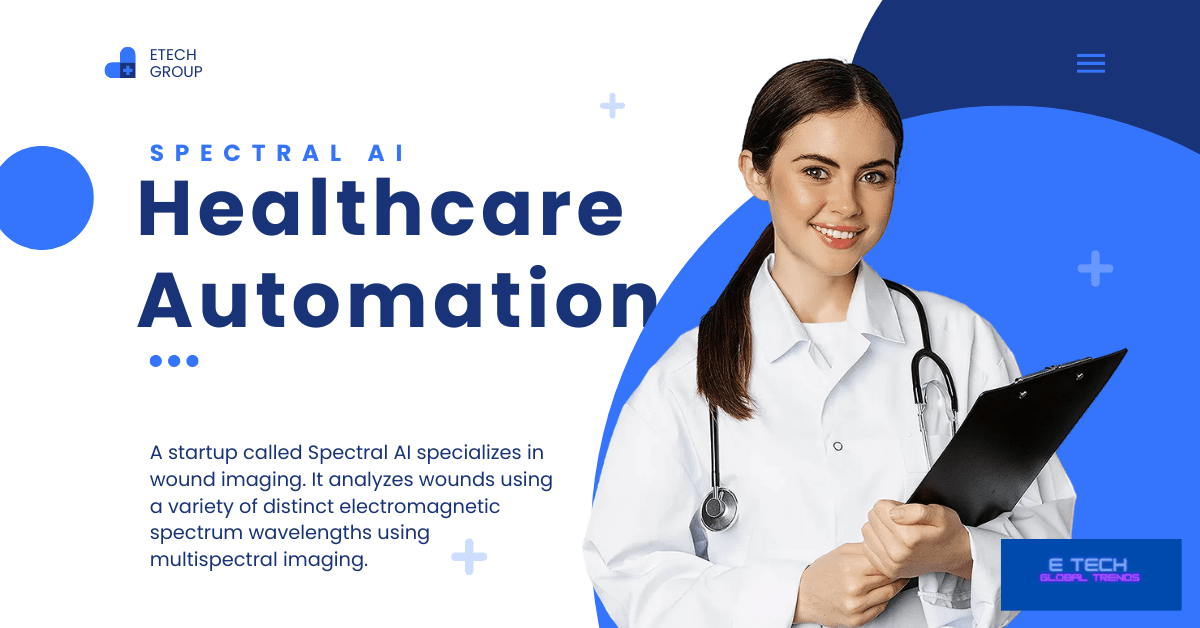
A startup called Spectral AI specializes in wound imaging. It analyzes wounds using a variety of distinct electromagnetic spectrum wavelengths using multispectral imaging. With the help of information that is invisible to human sight, AI then evaluates the pictures to provide doctors with an estimate of how the injury will heal.
263B data points from a healthcare database were used to train the DeepView AI model.
YTD, Spectral reported $3.8 million in revenue from research & development, mostly from contracts involving the US government.
Spectral AI: Is it capable of significant importance for healthcare automation?
The short answer is yes, Spectral AI is not only capable of significant importance for healthcare automation, but it is already demonstrating it in specific, high-impact clinical areas. However, its importance is more specialized than a general-purpose AI tool.
Here’s a breakdown of why it’s important and the nuances involved,
What Makes Spectral AI Unique?
Spectral AI’s core technology is DeepView,
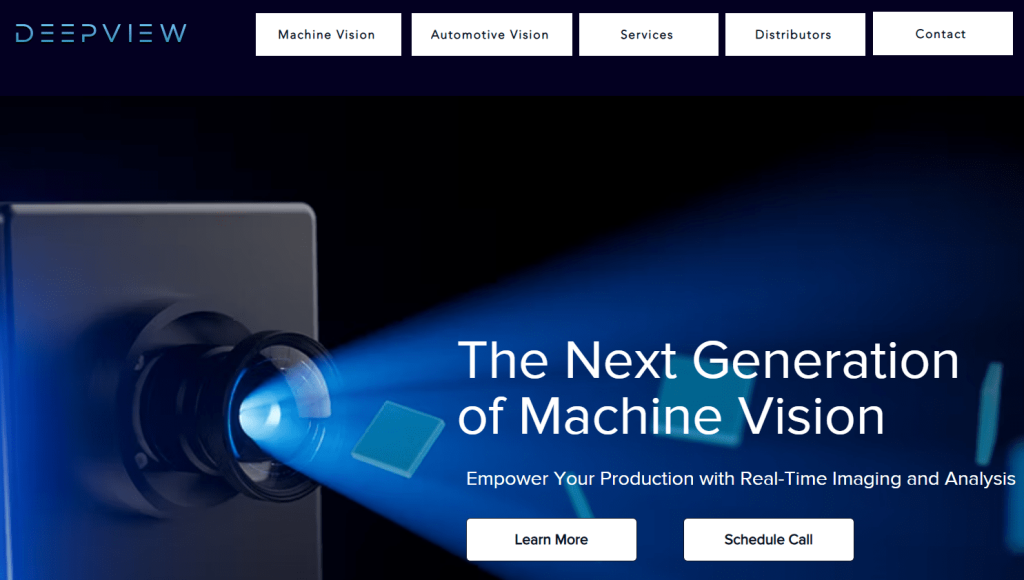
a non-invasive imaging system that uses multispectral imaging (capturing light data across many wavelengths) combined with proprietary AI algorithms.
Unlike AI that analyzes existing data (like X-rays or EHRs), its AI is trained to interpret optical data to assess biological tissue in real-time.
Assessment of wound healing, particularly for burn injuries & diabetic foot ulcers (DFUs), is its main clinical goal.
1.0 Automating Accurate Burn Care.
Areas of High Significance for Healthcare Automation
Problem:- Even professionals may not be able to accurately determine whether a burn would heal on its own merits or require surgery due to subjective assessments of burn depth. Inaccurate evaluation results in inferior outcomes and more expenses.
Automation from Spectral AI:-
DeepView gives an objective, predictive evaluation (e.g., “95% chance of healing within 21 days”) by analyzing the tissue composition of the wound (oxy/deoxy-hemoglobin, water, etc.). A crucial diagnostic choice is automated and quantified in this way.
Impact:- Facilitates quicker, more precise triage, improves surgical planning, minimizes needless procedures, and can drastically save healthcare expenses. One of the best examples of diagnostic automation is this.
2.0 Managing Diabetic Foot Ulcers Automatically.
Problem:- One of the main reasons for amputations is DFUs. Because it is difficult to predict which ulcers may worsen, treatment is reactive rather than preventive.
Automation of Spectral AI:-
The AI generates a “healing probability” score every week. This identifies high-risk patients for prompt intervention by automating the monitoring & risk-stratification procedure.
Impact:- May help avoid infections and amputations by enabling automated, proactive treatment routes. Prognostic monitoring is automated as a result.
3.0 Clinical Trial Endpoint Automation:
Problem:- In clinical studies, the method is measuring wound healing frequently, manually, subjectively, and slowly.
The Automation of Spectral AI:-
Offers a quantitative, objective healing metric.
Drug along with device development, can be accelerated by automating endpoint evaluation, which makes trials quicker, less expensive, and more dependable.
Why It’s a Specialized but Revolutionary Player?
Deeper Than Wider:- It is not a “jack-of-all-trades” AI that can automate every aspect of healthcare. It is crucial for solving a particular, expensive, and individualized clinical issue.
Hardware + AI Model:- The imaging system’s proprietary hardware and the AI model that was available on its exclusive dataset combine to give it its power. This results in a defensive moat and a high hurdle to entrance.
Regulatory Success:- It is pursuing FDA 510(k) approval for DFUs after obtaining it for burn evaluation. Clinical adoption & automation within authorized workflows depend on this regulatory approval.
Nothing is perfect, so Spectral AI has some limitations.
Restrictions and Points to Remember.
Not yet a universal platform: Wound treatment is the main focus of its present uses. It has yet to be demonstrated, however, the technique may eventually spread to other fields (such as the survival of tissues in surgery or skin transplant monitoring).
Adoption and Integration:- Integration into hospital processes (ER, burn centers, wound clinics) determines its significance. Managing change and demonstrating affordability to healthcare systems are necessary for this.
Competitive Landscape:- Long-term supremacy isn’t certain because other businesses are investigating comparable optical/AI wound care technologies.
Take-home Msg.
As a trailblazer in objective tissue diagnostics, spectral AI is extremely significant. It directly affects long-term morbidity, surgical expenses, and patient outcomes by automating a crucial, subjective clinical decision-making process.
It serves as a potent case study for healthcare automation, demonstrating how domain-specific AI combined with specialized hardware can automate difficult clinical decisions in a controlled setting. In its primary field of wound care, it has an opportunity to represent the standard of care and a key automation tool, making it an important component of the larger healthcare AI jigsaw, even though it won’t automate hospital operations or radiology reporting.
The benefits and utilization of Healthcare Automation.
By utilizing linked devices and real-time data exchange to enhance patient care, operational effectiveness, and healthcare outcomes, the Internet of Things is revolutionizing the healthcare industry. The market trends and the five key advantages of IoT for healthcare…
Overview of the IoT Healthcare Market
By 2021, the IoT healthcare automation market would have 50 billion linked devices and be valued at $158.07 billion.
IoT is transforming healthcare delivery methods by facilitating large-scale action and improving patient support and preventative treatment.
IoT’s main advantages in healthcare
Telehealth and Remote Patient Monitoring
It reduces expenses and traffic in medical facilities by enabling physicians to treat patients via telecommunications.
Patients may perform routine tests in their homes and provide real-time data to experts thanks to innovations like smartphones & smart body sensors.
particularly successful in managing chronic illnesses in both urban and rural settings.
EHR systems and healthcare data
IoT facilitates the centralization of medical records by combining information from medical devices and monitoring systems.
EHR systems make it possible for physicians, laboratories, nurses, and other organizations associated with patient care to exchange information in real time.
Automation in Healthcare and Robotics
uses interactive physical assistance gadgets, robotic medical assistants, and surgical robots to transform healthcare.
How can AI lower healthcare costs while also greatly improving it?
The majority of people believe that AI will essentially replace doctors in healthcare by diagnosing and making suggestions. And I believed there wasn’t much use of AI in healthcare because that is currently unfeasible. However, it was mistaken.
Data analysis is another well-known use case where it truly functions. Although it is machine learning rather than genAI, it excels in analyzing standardized pictures, such as X-rays, and other scan types. Simply put, AI is more adept at spotting irregularities.
However, professionals completely overlooked the extent to which AI assists physicians with administrative duties. which the physicians actually applaud because they already detested it.
Upon the patient’s arrival, the physician must review their medical history, take notes on all of their statements, and enter the information into electronic systems.
Nevertheless,
AI makes it much simpler:
AI is able to compile a patient’s whole medical history, frequently making connections that physicians might overlook. For instance, the patient’s records show two distinct symptoms that were reported at two separate appointments and documented on two separate pages. Even when there is a lot of irrelevant information present, genAI excels at making connections between crucial bits of information.
Make visit transcripts that emphasize the key information while excluding unimportant aspects (such as when they discuss their grandchildren).
Gather crucial information to instantly complete the patient form. This looks amazing.
because AI ought to be focused on this. automating tedious chores so that people may concentrate on what really matters. Instead of attempting to replace doctors, it is genuinely assisting them.
Summary
Automating tedious processes, increasing productivity, and making wiser decisions, such as automating targeting ads in marketing or optimizing patient care in healthcare, are some of the ways artificial intelligence (AI) addresses industrial issues.
Global healthcare infrastructure expansion and rising disease prevalence. Technical advancements are ready to propel the automation of the tomography market’s substantial growth.
The industry will offer significant potential for both established players and newcomers as the need for precise, non-invasive diagnostic equipment keeps growing.
CT imaging has a bright future thanks to advancements in AI, mobility, and cost-effectiveness, especially in underprivileged areas where access to excellent health care is expanding.
So, that’s all for now. We will consistently update whenever important updates are available.
Read related articles here. Healthcare beyond now, Business and data science