
AI Model Development
Advanced AI-powered apps can be made by developers to enhance productivity and provide individualized experiences. AI Model Development is a trending topic due to its high importance.
What does AI Model Development mean?
It’s not just about adding an AI chat agent—the focus, efficiency and optimization of a service delivery.
What are the Trends for AI Model development?
The world of artificial intelligence has progressed from the original “shock and awe” of enormous chatbots to an era approaching industrialized intelligence. Development is now about creating autonomous, dependable systems that can cooperate and operate at the edge, not merely about adding more parameters.
1.0 The Rise of Agentic AI: From Autonomy to Copilots.
By 2026, proactive AI agents will have replaced reactive “Chatbots” as the most significant change. In addition to providing answers, these models independently use tools, access the web, and carry out multi-step procedures.
MAS-Multi-Agent Systems:- Rather than creating a single, enormous model, engineers are creating “meshes” in which highly skilled agents, such as “Researcher Agents,” “Coder Agents,” and “Legal Agents”, cooperate to accomplish intricate tasks.
Self-Verification:- The “hallucination” problems that were prevalent in 2024–2025 have been greatly reduced by new models that incorporate internal evaluation loops to “double-check” their own tasks before displaying them.
2.0 The New Scaling: Efficiency.
The “brute force” scaling of 2024 has reached diminishing results, although $GPT-5$ level models continue to push the frontier. The emphasis is now on Small Language Models (SLMs) and Inference Scaling. Calculation at Test Time: During the inference phase, models like the “Reasoning” variations ($o1$, $DeepSeek\ R1$, etc.) are trained to “think” longer rather than just predict the next word, which enables them to handle more challenging math and logic issues. On-Device AI: Quantization-Aware Training (QAT) has adapted high-performance SLMs (under 10B parameters) to operate locally on laptops and phones, providing lower latency and improved privacy.
Does the “hallucination” of AI generated contents is often happen? Yes, it is.
Possible in Citation and references generation in Academic sources. Such as DOIs:- Digital Object Identification.
3.0 GraphRAG is taking the place of “Deterministic” Intelligence Standard Retrieval-Augmented Generation (RAG).
Knowledge graphs and vector databases can be used to allow models to follow structured relationships instead of just searching for similar-sounding text (e.g., “Person A works for Company B that is a subsidiary of C”).
Because of this, AI is far more dependable in fields like law, finance, and medicine, where precision is crucial.
4.0 Creating a uniform “Agentic Internet.”
As hundreds of millions of agents connect to the internet, new protocols are emerging to facilitate communication between them:
MCP-Model Context Protocol:- A universal standard that eliminates the need for manual API integration and enables AI agents to “discover” & interact with data and tools quickly.
A2A:- Agent-to-Agent Frameworks:-
that enable direct negotiation between your own AI agent and a doctor’s “scheduling agent” or a store’s “sales agent” are known as agent-to-agent (A2A) communication.
What challenges arise with AI Model Development?
In the area of artificial intelligence, nations continue to encounter certain difficulties. First, the capacity for innovation in disruptive & incremental technologies like basic theories and unique models is hampered by the relative paucity of top AI personnel. Second, the industrial foundation layer’s overall strength is low due to a lack of high-quality data accumulation and US restrictions in areas like sophisticated semiconductors and essential foundational software. To a certain degree, these considerations have impacted China’s overall leadership in the creation of AI models.
However, China has evolved to internationally advanced levels in several areas and made considerable strides in the creation of artificial intelligence models. China is predicted to close the gap with top nations in the future and even take the lead in several areas due to ongoing technological advancements and more international cooperation.
ArizeAI
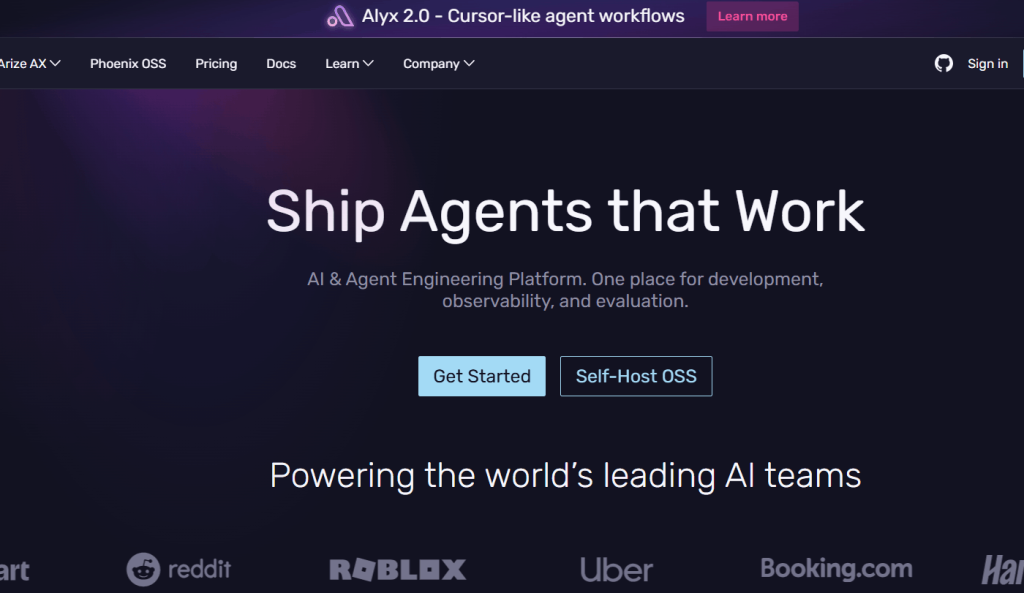
An observability platform called ArizeAI was created to enable efficient AI model development. Every month, it performs more than 50 million assessments of generative AI and machine learning models, supporting more than 1 trillion conclusions. Since its 2023 release, Arize’s open-source Phoenix software has had over 2.5 million downloads each month. The free and open-source enterprise platforms’ insights are intended to guarantee the dependability, accountability, and transparency of AI models. Arize raised $70 million in a Series C financing in February 2025. It was the biggest fundraising effort for an AI observability solution in history.
AI is already being used in some form by 78% of businesses worldwide. At least 90% are investigating its application.
In the past 2 years, “AI ethics” searches have increased by 418%.
Also, more than half of AI developers, data scientists, and engineers continue to point to data privacy and response accuracy as obstacles to the implementation of LLM.
There are emerging development frameworks to help meet the demand for AI safely and efficiently:
By identifying problems and increasing productivity, Fiddler AI helps businesses launch & update models more quickly. Just last month, it raised $30 million in a Series C fundraising round, increasing its total capital to about $94 million.
Superwise is a platform for AI monitoring and observability. It analyzes performance using more than 100 parameters and generates incident reports in real time.
What are the alternatives for AI Model Development?
The productivity and reproducibility of the AI model creation process can be greatly increased by automating it. The following frameworks and tools are frequently used to automate different phases in AI model development:
AutoML Libraries: Auto-sklearn: An automated machine learning toolbox that can be used in place of a scikit-learn estimator.
Genetic programming is used by TPOT, an automated machine learning tool, to optimize machine learning pipelines. H2O.ai: Offers AutoML capabilities for creating and implementing machine learning models.
Optimization of Hyperparameters:
Hyperopt: A Python package for parallel and serial optimization over asymmetrical search spaces, such as conditional, discrete, and real-valued dimensions.
Optuna: A software framework for automatic hyperparameter tuning specifically created for machine learning.
MLflow is an open-source platform for managing the machine learning lifecycle, which includes deployment, repeatability, and experimentation.
Weights & Biases: Machine learning collaboration, visualization, and experiment tracking tool.
Preprocessing Data:
Featuretools: An automated feature engineering Python library that is available for free.
An open-source version management system for machine learning initiatives is called DVC (Data Version Management).
Model deployment is facilitated by Kubeflow, an open-source machine learning platform built on the Kubernetes framework that makes it simpler to deploy, monitor, and manage machine learning models.
TensorFlow Serving: An adaptable, powerful serving mechanism for production-setting machine learning models.
A Python module called Luigi aids in the creation of intricate batch task pipelines.
Apache Beam is a unified programming architecture that supports batch and streaming data and is used to define and run data processing pipelines.
Solutions Based in the Cloud:
Google Cloud AutoML: Offers a range of machine learning tools that let developers train superior models even if they have no experience with machine learning.
For a number of tasks, Amazon SageMaker Autopilot automates the creation, training, and deployment of machine learning models.
Within the Azure Machine Learning service, Microsoft Azure AutoML provides automated machine learning capabilities.
Extensions for Notebooks: Extensions for Jupyter Notebooks: Jupyter Notebooks can be parameterized and run automatically using a variety of extensions, including papermill, nbconvert, and nbparameterise.
MLflow: MLflow can deploy models to several platforms in addition to tracking experiments.
Airflow is a platform for programmatically authoring, scheduling, and monitoring workflows. It is perfect for automating intricate data pipelines.
Summary
1.0 Unlike the previous focus by this year, the trend implies that Agents with Task Anatomy rather than general targets of General Chat capabilities.
2.0 The size of the Model is expected to be high in the earlier concept. But now it has changed to a technically improved phase of efficiency and optimization.
3.0 base logic is used before, which was “Next-token prediction.” Now it has shaped into “Multi-step Reasoning & Planning.”
4.0 The deployment strategy was cloud-based(centered). But now the consideration changes to “Hybrid (Cloud + Local Edge).”
These trends are prominent in today’s technology of AI Model Development.
Read more on related topics here: Generative AI Models, Agentic AI